Best Phone Plan Options for International Students in Canada
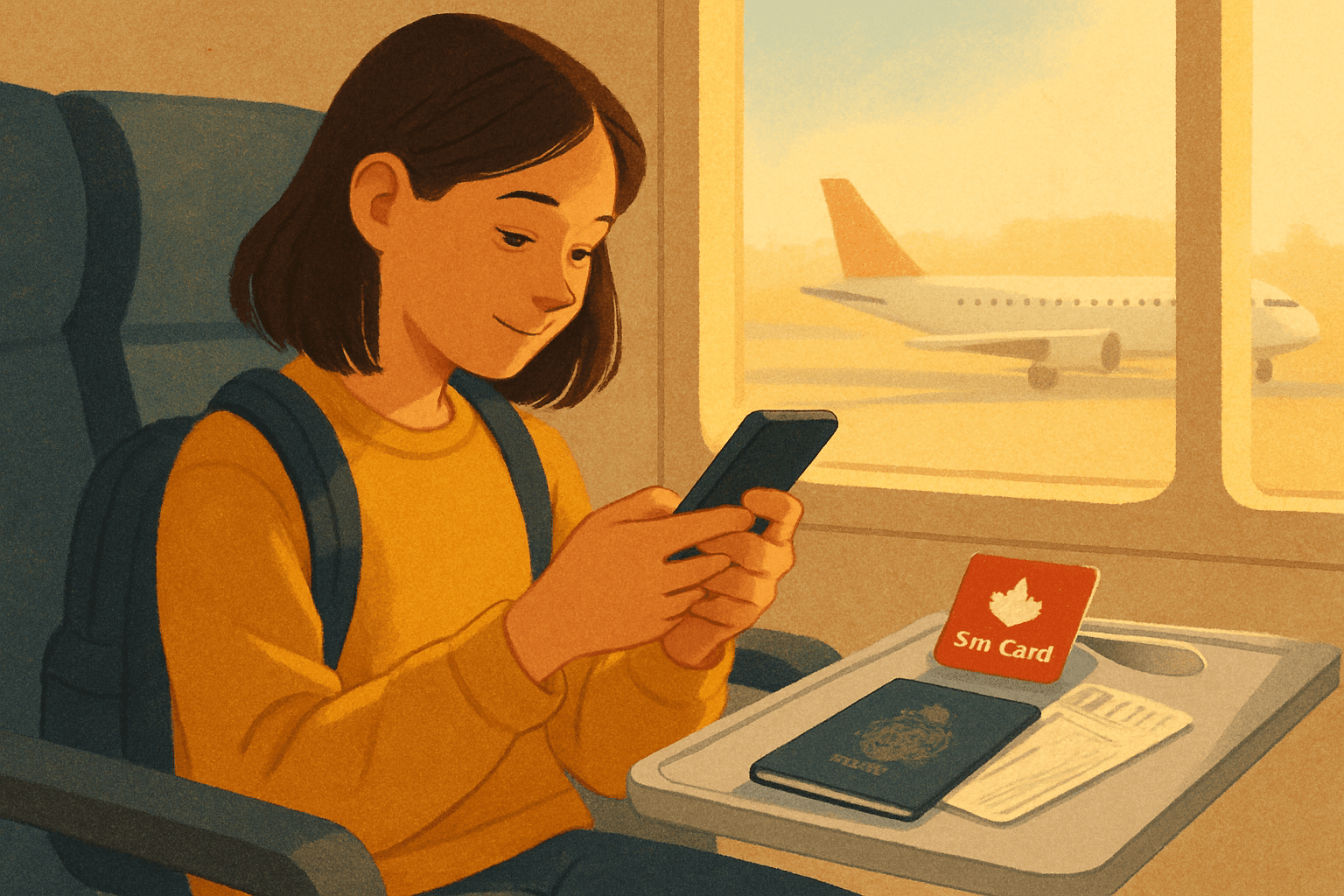
Landing in Toronto or Vancouver without a working phone is one of those small logistical problems that feels enormous in the moment. You need to call your homestay host, pull up a map, confirm your Uber, or just tell your parents you made it. And yet phone plans in Canada are set up in a way that assumes you already have a credit history here — which, if you just got off a fifteen-hour flight from Lagos or Manila, you obviously don't.
The good news is that this is a solved problem. Thousands of international students go through exactly this every August and January intake, and there are now enough prepaid and eSIM options that you genuinely don't need to overpay or sign anything binding just to get connected. The bad news is that the pricing landscape changes often enough — carriers rebrand, promos expire, sub-brands merge — that a lot of the "best plans" listicles floating around are already stale by the time you read them. So instead of handing you a locked-in price table, this piece is going to walk you through how to think about the decision, name the actual players worth knowing, and flag the traps that catch people in their first week.
The one thing to understand first: prepaid vs. postpaid
Canadian phone service basically splits into two categories, and almost every question you have gets easier once you understand the difference.
Postpaid is the traditional model: you sign up, use the service for a month, and get billed afterward — like a utility bill. This is what Bell, Rogers, Telus, and Fido typically push as their default plans. To get approved for postpaid, providers usually run a credit check, and if you have no Canadian credit history (which almost every new international student doesn't), you'll either get rejected outright or asked for a security deposit that can run into a few hundred dollars. It's not that they're trying to be unwelcoming — they just have no way to assess your risk as a customer yet.
Prepaid flips this: you pay before you use the service, in fixed monthly chunks, and there's no credit check involved because there's nothing to default on. You just top up, use your data, and top up again next month. This is where almost every international student should start.
The trade-off is real, though. Prepaid plans generally don't let you finance a phone (you're expected to bring your own device or buy one outright), and they don't help you build a Canadian credit history the way a postpaid account technically can. If you know you're staying in Canada for four-plus years and plan to eventually get a car loan or mortgage here, it's worth knowing that a postpaid plan, once you qualify for one, is one of several small tools people use to build credit. But that's a year-two problem, not a week-one problem. Don't let the credit-building angle distract you from just getting connected first.
Who to actually look at
Canada's mobile market is dominated by three companies — Bell, Rogers, and Telus — but each of them owns a handful of "flanker brands" that offer cheaper, no-frills, prepaid service using the same network infrastructure. This matters because your coverage quality is often identical to the flagship brand even though you're paying a fraction of the price.
Public Mobile (owned by Telus) runs entirely online, has no physical stores, and is built around prepaid plans with no credit check. It also has a somewhat unusual community-rewards system where your bill can shrink over time if you refer people or participate in their forums — not something to count on for your first month, but a nice bonus later.
Koodo (also Telus) sits a notch above Public Mobile in terms of customer service — they have real stores and phone support — with both prepaid and postpaid tiers. Koodo Prepaid is a solid middle-ground option if you want the ability to walk into a store when something goes wrong.
Lucky Mobile (Bell) and Chatr (Rogers) are the direct prepaid-focused competitors, generally priced close to Public Mobile. Pricing between these three shifts often enough — sometimes month to month — that quoting an exact number here would probably be wrong within a few weeks of publishing. As a rough sense of the market, students should expect prepaid plans with a handful of gigabytes of data to land somewhere in the $25–$45/month range, with lower-data or Wi-Fi-heavy plans occasionally dipping under $20. Always check current pricing directly on the carrier's site before you commit — screenshots and blog posts go out of date fast.
Freedom Mobile is worth a specific mention because it's often the cheapest option for heavy data users, though its network historically has weaker coverage in rural areas and inside some buildings compared to the Big Three. If you're studying in a major city — Toronto, Vancouver, Calgary, Montreal — this usually isn't an issue. If your campus is in a smaller town, it's worth asking other students at your specific school how Freedom performs there before signing up, since coverage really is location-dependent.
Fido (Rogers) rounds out the group as another popular no-credit-check-required prepaid and lower-tier postpaid option, often running promos aimed specifically at newcomers.
None of these require a Canadian credit history for their prepaid tiers. That's the headline fact worth remembering: if a website or a kiosk tells you that you need a credit check just to get a SIM card, you're either being upsold into a postpaid plan you don't need, or you're talking to the wrong provider.
Setting it up before you even land
This is the part that's genuinely improved in the last couple of years and that a lot of general "phone plans in Canada" articles don't cover well, because it's specific to people arriving from abroad rather than people already living here.
Most modern smartphones — iPhone XS and later, most Samsung Galaxy S20 and later, and a wide range of Google Pixels — support eSIM, a digital SIM profile you can activate without inserting a physical card. Public Mobile, Koodo, Bell, Rogers, Telus, and Freedom all support eSIM activation on at least some of their plans. Practically, this means you can go through the sign-up process on a carrier's website while you're still in Delhi or Lagos, purchase a plan, receive an activation QR code by email, and scan it into your phone's settings. Depending on the carrier, the plan can go live immediately or be scheduled to activate on a specific date — useful if you want it switched on the morning you land rather than paying for a week you're not using it.
A few practical notes on doing this:
You'll need your device's IMEI number to confirm compatibility, and you'll want to double check the phone is unlocked. A phone bought under contract in your home country is very often locked to that carrier, meaning it won't accept a different provider's SIM (physical or digital) until it's unlocked — sometimes for a fee, sometimes for free after the contract period ends. Check this before you leave, not after, because unlocking from outside Canada can be slower and occasionally impossible depending on your original carrier's policies.
Also worth checking: Canadian carriers operate on specific frequency bands, and while most recent phones sold internationally support a wide enough range of bands to work fine, older or region-specific models sometimes don't get full LTE/5G speeds here even if they technically connect. A quick search of "[your phone model] Canada band compatibility" or a look at the carrier's own compatibility checker tool will save you a headache.
If eSIM feels like too much to manage before a long flight, that's completely fine — plenty of students just wait and grab a physical SIM after landing. The eSIM route is a convenience, not a requirement.
Where not to buy your SIM
Airport kiosks at Pearson, YVR, or Montreal-Trudeau will absolutely sell you a SIM card the moment you land, and for a lot of tired, jet-lagged travelers, that convenience is tempting. Here's the honest take: airport SIM offers are almost always tourist-plans in disguise — short validity windows, inflated per-GB pricing, and terms clearly built for someone here for ten days, not ten months. They're fine as a stop-gap to get data for your first 24–48 hours if you didn't sort out an eSIM in advance, but don't sign up for anything longer than a week from an airport kiosk.
Once you're settled — even just a day or two in — you'll get meaningfully better value from:
- A carrier's own store or website (Koodo, Fido, Freedom stores exist in most malls and downtown cores)
- Big-box retailers like Walmart, which sell prepaid starter kits for several of the brands mentioned above, often at a small discount versus buying directly from a mobile-only kiosk
- Dollarama and similar shops, which in some cities stock SIM starter packs for prepaid brands — genuinely one of the cheapest ways to get a physical SIM, though you'll still need to top up online or through the carrier's app
Your university or college international student office is also worth checking — many partner informally with a specific carrier and can point you to a deal or at least tell you what most students on campus are using, which doubles as a decent coverage-quality signal for that specific location.
How much data do you actually need?
This is where a lot of students either overpay out of anxiety or underpay and get frustrated mid-semester. It really comes down to your actual habits, not a generic "student plan" tier.
If you live in a place with reliable Wi-Fi — most dorms, homestays, and shared student housing qualify — and you mostly use your phone for messaging, checking email, and occasional map lookups when you're out, somewhere in the 1–3GB per month range is often genuinely enough. This is the cheapest tier across almost every carrier listed above.
If you're regularly streaming music on your commute, using maps for transit or driving, and scrolling social media outside of Wi-Fi zones, 5–10GB is a more realistic range. This covers the majority of students who don't want to think about their data usage constantly.
If you're a heavy TikTok or Instagram Reels user, frequently use your phone as a hotspot for a laptop, or stream video regularly without Wi-Fi, you're looking at 20GB or more. It's worth being honest with yourself here — running out of data mid-month and having to pay overage fees or buy a data add-on almost always costs more than just picking the right tier from the start.
One thing worth doing in your first month: actually check your data usage in your phone's settings around the two-week mark. If you're already at 60%+ of your plan, you picked the wrong tier and should bump up next cycle rather than white-knuckling it to the end of the month on low data mode.
Calling and texting family back home
This is the part that gets almost no attention on the big comparison sites, probably because they're written with a general Canadian audience in mind, not specifically for people whose family and close friends are on a different continent. It matters a lot in practice.
Most standard Canadian plans include unlimited Canada-wide calling and texting, and increasingly include Canada-US calling as a baseline feature — but international calling to countries outside North America is usually a separate add-on or charged per minute, and per-minute international rates can add up fast if you're calling home regularly.
A few practical routes people use instead of paying carrier international rates:
WhatsApp, Google Meet, FaceTime, or WeChat calls over Wi-Fi or data are free and are what the vast majority of international students actually use for daily contact with family — this sidesteps the international calling problem almost entirely, as long as the person on the other end also has data or Wi-Fi.
Calling cards or app-based international calling credits (Skype Credit and similar) still exist and are useful specifically for calling landlines or older relatives who may not be on a smartphone-based messaging app.
Add-on international calling bundles offered by some carriers, usually bundled with a set number of minutes to a specific list of countries — worth checking if your family situation genuinely requires regular voice calls to a landline rather than internet calling. These vary a lot in whether your specific home country is even included on the list, so check before assuming it applies to you.
If your data plan is decent (5GB+) and your family has any kind of smartphone and home internet or mobile data, you'll likely never need a traditional international calling plan at all. It's one of those legacy phone-bill line items that's becoming less relevant every year, but carriers still market it because plenty of people don't realize they can just switch to app-based calling.
A realistic first-month scenario
Say you land in Canada in early September for the fall intake. You didn't set up an eSIM in advance because you were busy with visa paperwork and packing. Here's a sensible sequence: grab a short-term data pass from an airport kiosk or use your home carrier's international roaming for the first day or two — expensive per day, but you're only using it for 24–48 hours. Once you're at your homestay or residence and have a bit of downtime, walk into a Koodo, Fido, or Freedom store, or check Walmart's prepaid SIM section, bring your passport and your unlocked phone, and set up a prepaid plan sized to your realistic data needs — start with a mid-tier option like 5-10GB, since you genuinely don't know your usage pattern yet in a new city. After your first billing cycle, look at what you actually used and adjust up or down. Skip anything that requires a credit check in month one; you can revisit postpaid once you've been here a year and have a bank account, a Canadian address on file, and maybe a first credit card to show some payment history.
The bigger picture: it's a small cost, treat it that way
A prepaid phone plan is genuinely one of the smaller recurring costs in a Canadian student budget once you compare it to rent, tuition, or groceries — usually somewhere between $20 and $50 a month depending on the tier you choose. It's also one of the easiest costs to get right on the first try, because unlike a lease or a course registration, you're not locked in. Prepaid plans can be changed, downgraded, upgraded, or switched to a different carrier entirely with essentially no penalty beyond losing whatever days are left on your current cycle.
So don't agonize over picking the "perfect" plan before you arrive. Pick a reasonable no-credit-check prepaid option from a name you recognize, size the data to your best guess at your habits, and adjust after your first real month of usage tells you what you actually need. That's a better strategy than trying to reverse-engineer the ideal plan from a blog post written months before you touched down — pricing moves, promos rotate, and what mattered was never the exact dollar figure anyway. It was knowing you don't need a credit check, knowing eSIM exists, and knowing which brands are built for exactly this situation. Now you do.
Still have questions?
Open the chat in the bottom-right corner — ask anything about this topic and get an instant answer.