How to Actually Survive in Canada as an International Student
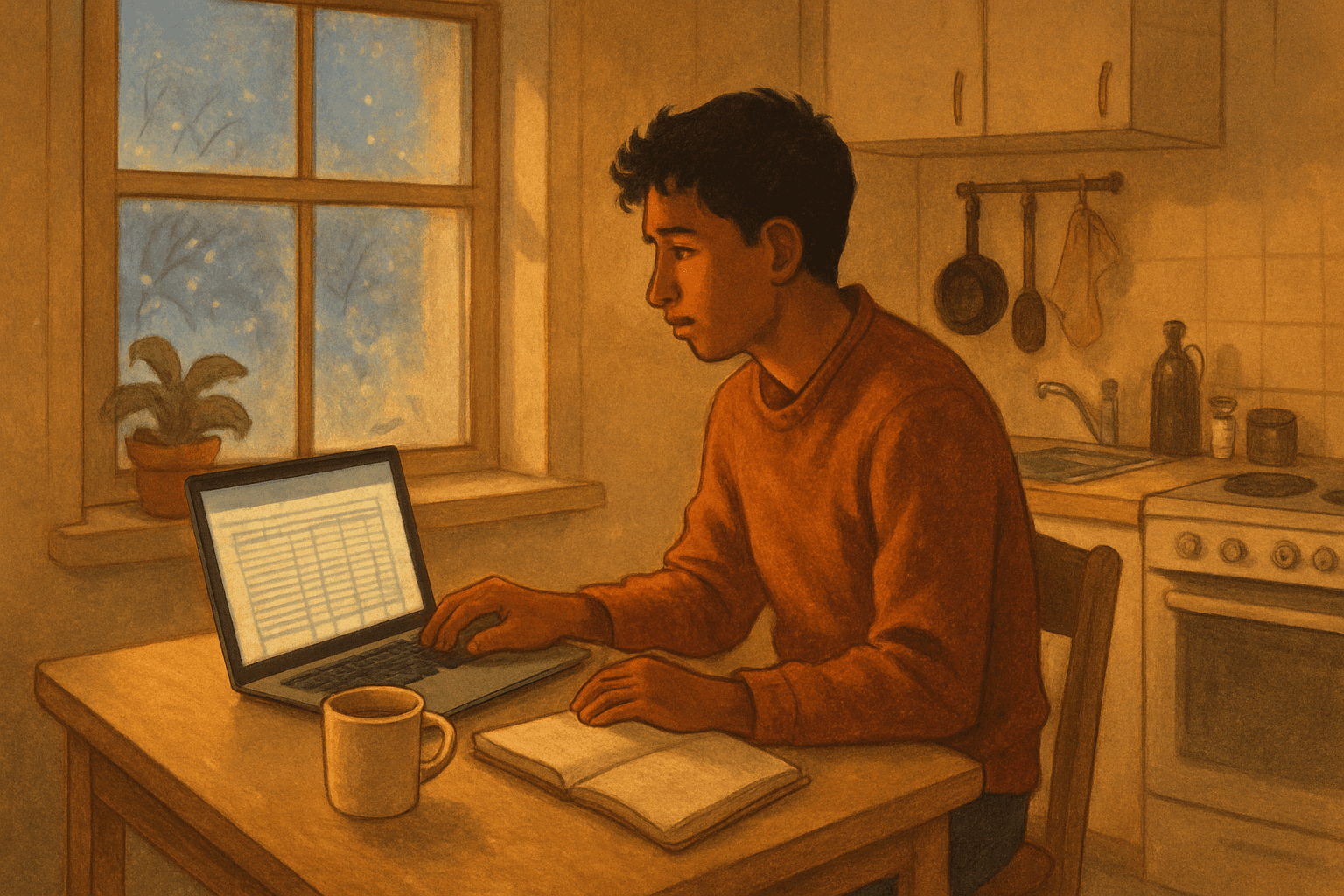
Nobody tells you that the hardest part of studying in Canada usually isn't the coursework. It's the third week of October, when your first big rent payment has cleared, groceries cost more than you budgeted, your part-time shifts haven't started yet, and the group chat back home is asleep because of the time difference. That's the moment this article is actually written for.
There's a lot of generic "settle-in checklist" content out there — get a SIN number, open a bank account, buy a winter coat. All true, all fine, but it skips the part that actually determines whether your first year feels survivable or brutal: the money math, the work-permit rules that changed recently, and the honest fact that a growing number of international students in this country are genuinely struggling financially. Let's go through it properly.
Start With the Real Number, Not the Official One
As of September 2025, IRCC's minimum proof-of-funds requirement for a single international student is $22,895 CAD per year, on top of tuition and travel. That figure exists so the government can confirm you're not arriving with nothing. It is not a livable budget, and treating it as one is where a lot of students get into trouble in month four or five.
Divide that number out and you get roughly $1,900 a month for everything that isn't tuition — rent, food, transit, phone, clothes, the occasional emergency. In Winnipeg, Edmonton, or smaller cities like Sault Ste. Marie or Fredericton, that's tight but workable if you're careful and share housing. In Toronto, Vancouver, or increasingly Mississauga and Brampton, it simply doesn't cover a one-bedroom or even a shared room in a lot of neighborhoods once you add utilities and a transit pass. Students who picked a GTA or Lower Mainland school without checking rental prices first often find this out the hard way, three weeks after signing a lease.
So before anything else: look up actual current rental listings in the neighborhood near your campus, not the average city rent quoted in a brochure. A shared basement room 45 minutes from a Toronto campus by transit can run considerably less than a studio five minutes away — that trade-off (commute time versus rent) is one of the first real decisions you'll make, and it's worth making deliberately instead of by accident.
The Work Rules, Actually Explained
This is where a surprising amount of content online is just wrong or outdated, because the rules changed. Here's what applies now:
Off-campus work cap: Eligible study permit holders can work up to 24 hours per week off-campus during academic sessions, and full-time during scheduled breaks (winter/summer holidays, reading week). This replaced the older 20-hour cap. The 24 hours is calculated across all your jobs combined, not per employer — so if you work 14 hours at a coffee shop and 12 at a retail job, you're already over, even though neither job alone looks like a violation. Employers don't always track this for you. You have to.
On-campus work: Generally unlimited hours, as long as you're enrolled full-time and hold a valid study permit — this is a separate category from the off-campus cap and a genuinely underused option. Campus libraries, dining services, research assistant positions, and international student offices themselves often hire students directly.
Co-op and internships: This is a real, recent change worth flagging because most guides still get it wrong. As of April 2026, students in postsecondary programs no longer need to apply for and pay for a separate co-op work permit to do a work placement that's a mandatory part of their program (internships, practicums, co-op terms), as long as the placement is 50% or less of the total program length. A valid study permit with work conditions is sufficient on its own. Before this, students were paying extra fees and waiting on separate processing just to do work their program already required — that friction is gone now, which matters if your program has a mandatory placement component. Always double check the current requirement on canada.ca before you rely on this, since implementation details can shift.
The permit cap context: Canada introduced caps on new study permits starting in 2024, and processing has generally gotten tighter and slower since. If you're still in the application stage, build in more buffer time than you think you need, and confirm your Provincial Attestation Letter (PAL) or Territorial Attestation Letter (TAL) requirements are current for your province — these are relatively recent additions to the intake process and not every applicant realizes they need one.
What 20-24 Hours a Week Actually Buys You
Do the math honestly. At minimum wage — which varies by province, generally somewhere in the $15-17 CAD/hour range as of recent guidelines — 20 hours a week works out to roughly $1,200-$1,400 a month before tax. In a genuinely affordable city, that can realistically cover rent in a shared house plus groceries, with little left over. In Toronto or Vancouver, that same income might cover 55-65% of your actual monthly costs, which means you're drawing down savings or family support for the rest, every single month, whether you admit that to yourself or not.
This is the uncomfortable math a lot of "survival guide" content skips over, and it's worth sitting with before you arrive, not after. If your total funding plan assumes part-time work will fully close the gap in an expensive city, it's worth revisiting that plan now — either by choosing a lower cost-of-living location, arranging more support before you land, or being realistic that your first year will involve some financial strain you need a cushion for.
The Part Nobody Wants to Say Out Loud: Food and Housing Insecurity Are Real
This isn't meant to scare you, but it would be dishonest to leave out. Food bank usage among international students has become enough of a strain in some cities that certain organizations have had to limit or pause service specifically for this group, because demand outpaced what they could sustain. That's not a reflection on students doing anything wrong — it's a reflection of a gap between what proof-of-funds requirements assume and what rent actually costs in the cities where a lot of programs are concentrated.
If you find yourself in a month where the math genuinely isn't working — rent's paid but there's not enough left for groceries — please don't treat that as something to hide out of embarrassment. Every college and university with international students has an international student office, and most have some combination of emergency bursaries, food bank partnerships, or at minimum, staff who've seen this exact situation many times and know what local resources exist. Community centers, local mosques, gurdwaras, temples, and churches in many cities also run food programs open to anyone, no strings attached, no faith requirement. Using these resources when you need them isn't failure. It's one of the actual survival skills this article is named for.
The Loneliness Curve, and Why It's Not Linear
Culture shock doesn't hit on day one, usually. Day one is adrenaline and errands — SIN number, bank account, grocery run, figuring out the bus app. The harder stretch tends to show up somewhere between week four and week ten, once the novelty's worn off and the actual routine sets in: same commute, same assignments, same small apartment, and a growing awareness of how far away everyone you love actually is. Video calls help less than people expect, partly because of time zones and partly because hearing about home from a distance can make the distance feel worse, not better.
This tends to ease, not because the homesickness disappears, but because a second life quietly builds itself alongside it — classmates who become actual friends, a part-time job that gives you a sense of rhythm, a neighborhood that starts to feel familiar instead of foreign. That takes months, realistically, not weeks. If you're three weeks in and it still feels impossible, that's not a sign something's wrong with you or your decision — it's closer to the median experience than people admit.
Practical version of this advice, not just the reassurance: join one thing in your first month that isn't academic. A cricket league, a cultural student association, a climbing gym, a campus job, a place of worship, a volunteer shift at an event. Not because "making friends" is a checkbox, but because having one recurring commitment outside your apartment and your program gives the week a shape that pure isolation doesn't have. Campus international student offices usually run orientation events specifically aimed at this in September and January — they're worth attending even if mixers aren't your thing, because the people there are in the exact same position you are.
If things go past ordinary homesickness into something heavier — persistent low mood, not eating, not sleeping, not functioning — most Canadian campuses have free counseling services for enrolled students, and provincial health coverage (once you're enrolled, depending on province) can extend to mental health support. This is genuinely worth using. There's no cultural shame requirement here; campus counselors see international students constantly and understand the specific stress of being far from your support system.
Money Habits That Actually Hold Up
A few things that matter more in practice than they sound like they would:
Get a no-fee or student bank account immediately, and ask specifically about newcomer/student packages — most major Canadian banks (RBC, TD, Scotiabank, CIBC, BMO) have one, often with a temporary fee waiver for the first year, sometimes a small welcome bonus. Don't default to whatever account the teller pushes first; ask what's designed for international students specifically.
Build a real monthly budget in your first week, not a vague mental estimate. Rent, phone, transit pass, groceries, and one buffer line for "things I didn't think of" — because there's always something in month one: a winter coat you didn't own, a textbook that cost more than expected, a deposit you forgot about.
Groceries, not takeout, is the actual budget lever. This sounds obvious but it's the single biggest controllable cost most students underestimate. Cooking at home consistently versus ordering food even twice a week is often the difference between a workable month and a stressful one. Discount grocery chains (No Frills, FreshCo, Food Basics depending on region) genuinely cost less than the mainstream chains for identical items — worth the extra ten minutes of travel.
Track your work hours weekly, not monthly. Going over the 24-hour cap even by accident is a study permit compliance issue, not just a minor paperwork problem — it can affect future permit applications, including your post-graduation work permit eligibility. Keep it simple: a notes app entry every Sunday with hours worked that week across every job.
Don't ignore small debts. A missed phone bill or a late credit card payment (if you get one) can follow you into a Canadian credit history that affects apartment applications and phone contracts for years. It's a slower-moving problem than rent, which is exactly why it's easy to deprioritize and exactly why it shouldn't be.
The Underlying Anxiety: Is This Actually Going to Be Worth It?
A lot of what drives someone to search "how to survive as an international student" isn't really about the logistics — it's the quieter question underneath: will this all lead somewhere, or am I just spending money and years to end up back where I started?
That's a fair question and there's no universally honest yes for every case. What's true is that the pathway most people are counting on — study permit, then a Post-Graduation Work Permit (PGWP), then possibly permanent residence through Express Entry or a Provincial Nominee Program — has gotten more competitive and less automatic than it was several years ago. Eligibility rules for PGWPs have tightened around program type and length in recent policy cycles, and PR pathways are increasingly points-based and program-specific rather than a straightforward "graduate and stay" route. It's genuinely worth researching your specific program and province's current PGWP eligibility on canada.ca before you enroll, not after, because "will my diploma qualify me for a PGWP" varies by institution type and program length in ways that aren't always obvious from a college's marketing materials.
None of that means it's not worth doing. It means going in with clear eyes about what depends on you (grades, work experience, language test scores, staying compliant with your permit conditions) versus what depends on policy that can shift while you're mid-program. Building a financial and emotional cushion assuming things might take longer or cost more than the brochure suggested is not pessimism — it's the same instinct as budgeting above the bare minimum instead of exactly to it.
A Realistic First-Semester Sequence
If it helps to have this as an actual sequence rather than scattered advice, here's roughly how the practical steps tend to land in order: apply for your SIN as soon as you land, since almost nothing else (bank account details, payroll) works cleanly without it. Open your bank account in the same week. Register for provincial health coverage if your province offers it to students, or confirm your school's mandatory health insurance plan details, since coverage gaps in the first month are a common and avoidable stress point. Find your international student office in person during orientation week, even if it feels unnecessary — you want to already know where it is and who works there before you actually need something urgently. Start job hunting in week one, not week four, since hiring timelines (interviews, reference checks, onboarding paperwork) eat more weeks than people expect. And build your budget spreadsheet before the first paycheck arrives, not after, so you're not reconstructing three weeks of spending from memory.
None of this guarantees an easy year. It does shift the odds meaningfully toward a workable one, which, realistically, is what "survive" actually means here — not thriving from day one, but building a life that holds together long enough for the harder early months to turn into a routine you didn't think was possible in October.
Still have questions?
Open the chat in the bottom-right corner — ask anything about this topic and get an instant answer.